Debt Management

Debt Management, Financial News, News, Student Loan Help, Student Loans

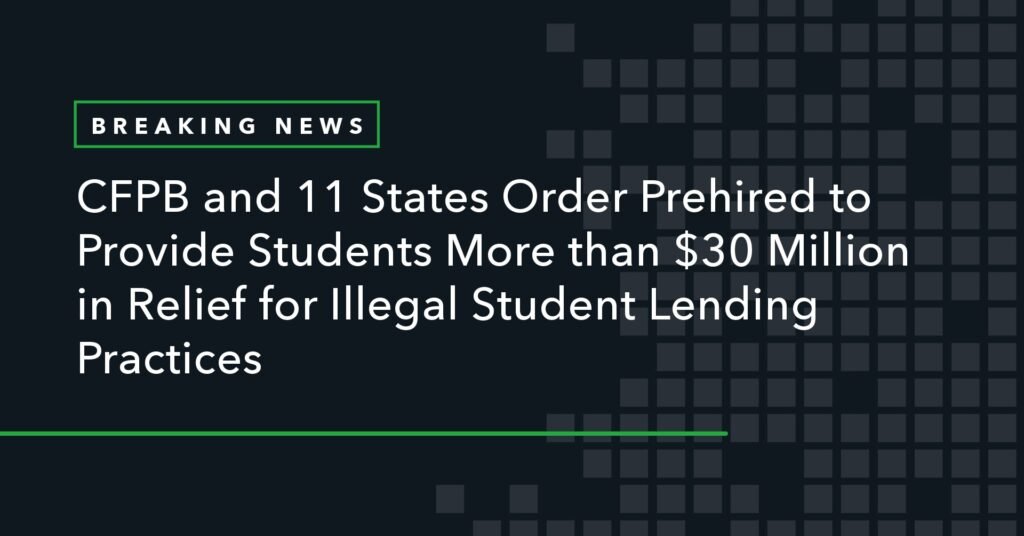
Prehired Exposed: How Student Loan Borrowers Were Misled

\”Prehired will void all outstanding income share agreements, refund harmed borrowers, and permanently cease operations\” In a recent announcement, the Consumer Financial Protection Bureau (CFPB) and 11 states have taken action against Prehired, a company that promised job placement to students but ended up causing harm to borrowers. Here\’s what you need to know: False Promises: Prehired attracted students by promising job placements and claimed that students wouldn\’t have to repay their loans until they secured a job. Violated the Law: The loans Prehired offered, known as \”income share\” loans, violated the law because they were structured in a way that could trap borrowers in debt. Abusive Debt Collection: When borrowers couldn\’t make payments, Prehired resorted to aggressive debt collection practices. To address these issues, the CFPB and the states took legal action. Here\’s what\’s happening: Prehired will provide over $30 million in relief to affected student borrowers. They are required to cease all operations. Prehired will pay $4.2 million in redress to consumers impacted by their illegal practices. All outstanding income share loans (valued at nearly $27 million) are voided and cannot be collected. Prehired is permanently banned from offering income share loans or any activities related to vocational education. A civil money penalty will be paid to the CFPB victims relief fund. This action aims to provide redress to students who were misled by Prehired\’s false promises and to hold the company accountable for its actions. If you have been affected by Prehired\’s practices, you can find more information at https://www.prehiredclaims.com/ or contact the CFPB for assistance. Remember, it\’s crucial to be cautious when considering financial opportunities and loans to ensure you\’re making informed decisions.

Credit Reports, Debt Management, Financial News, News, Personal Credit

An Overview of the CFPB & State Initiatives to Stop Wrongful Medical Bill Collections

Why this will interest you This is crucial because many consumers have suffered due to incorrect and unverifiable medical bills on their credit profiles. We should should ensure they aren\’t unfairly burdened with debts they don\’t rightfully owe. At Credilife®, this is the kind of work we specialize in. After conducing a comprehensive evaluation of your personal credit profile, we strive to ensure the accuracy and verifiability of reported information, especially that which is negatively impacting your credit profile. We also identify areas for improvement and provide tailored recommendations for credit building and account management. Our ultimate objective is to empower our clients with successes that pave the way for a brighter and more secure financial future. Important News from the Consumer Financial Protection Bureau Washington, D.C. – Today, the Consumer Financial Protection Bureau (CFPB) released a report that talks about the problems many American families face when debt collectors chase them for medical bills they might not even owe. The report focuses on the 8,500 complaints that people, including servicemembers and older adults, made in 2022 about medical debt collections. It also explains how the CFPB and states are working together to stop the collection of wrong or inaccurate medical bills. Additionally, it mentions what\’s happening in the broader debt collection market and what the CFPB and other federal agencies are doing to protect people from unfair and tricky debt collection practices. Why Is This Important? Lots of people are being hounded by debt collectors for medical bills, and this report shines a light on the problem of collecting bills that are wrong or not even owed. The CFPB has previously found that the collection of medical bills is often filled with mistakes. What the Report Revealed In 2022, the CFPB got thousands of complaints about medical debt collection. People were upset because they were being asked to pay bills that were already paid, were not really their responsibility, or were for the wrong amount. Sometimes, collectors started chasing these bills long after the medical services were provided, even decades later. Some collectors even put these bills on people\’s credit reports without asking them first. Surprisingly, even servicemembers and older adults faced these problems, even though they usually have insurance and access to reduced-cost healthcare. What You Need to Know Collecting medical bills that are not owed or getting the amount wrong may break the law. This report says that it might go against the Fair Debt Collection Practices Act or the Consumer Financial Protection Act\’s rules against unfair or tricky practices. This includes cases where collectors ask for payment for services you never received or charge you for more expensive services than what you got (sometimes called \”upcoding\”). States have their own rules to protect consumers when it comes to debt collection. Many states have made laws that protect people from unfair medical bill collection and reporting. Federal law doesn\’t usually override state laws in this area. So, state protections on medical bill collection are likely to continue. The CFPB is making sure that medical debt collectors follow the law. They have been checking on debt collectors and found many violations, like harassing people about unpaid medical bills or wrongly blaming them for identity theft. When necessary, the CFPB has taken actions against these collectors. The CFPB is also reminding companies about their responsibilities. They\’ve issued guidelines to remind debt collectors and credit reporting companies of what they need to do under the law. They\’ve also clarified that debt collectors may be breaking the law if they charge extra fees for payment. If you have to deal with debt collectors, the CFPB has resources to help you. They offer sample letters for different situations, like when you need more information about a debt, want to dispute it, or want to limit how and when debt collectors can contact you. They even have a letter for when you want all communication to go through your attorney. Read the report, Fair Debt Collection Practices Act CFPB Annual Report 2023.

Debt Management

TOP 5 CAUSES OF EXCESSIVE PERSONAL DEBT

Excessive debt is the biggest worry of most people. Financial issues are one of the leading contributors to divorce and suicide. We are provided with many opportunities to increase our debt, but getting out of debt can be especially challenging. Think about all the credit card offers and financing opportunities you’re faced with every day There are many things that create excessive amounts of debt, but the following 5 are among the primary culprits: Unemployment. The loss of a job forces many people to rely on consumer debt for survival. Most families lack an emergency fund, and the credit cards are put into action rapidly. Many people fall into the habit of doing just enough work to avoid being fired. Put in the time and effort to become an indispensable member of your company. If you believe that your job is in jeopardy, start looking for a new position! Be proactive. Start your emergency fund today. If you already have one, ask yourself if it’s adequate. 2. Lack of self-control. Our society tends to be a little self-indulgent and lacking in discipline. It’s largely responsible for the high obesity rates in the United States, as well as the high levels of personal debt. How many items have you purchased in a moment of weakness that you don’t ever use or take the time to enjoy? Before making a significant purchase, ask yourself if it’s something you need or truly want. If it’s merely something you want, ask yourself if it’s something you would really enjoy owning. Will you use it? Put off significant purchases for a couple of weeks and see if the level of enthusiasm for purchasing it remains. Remind yourself that $100 invested at 10% is almost $750 in 20 years. That $500 watch or purse is really costing you $3,750 when viewed this way. Over 40 years the cost is almost $5,500 per $100. That $500 item is then $27,300! 3. Not having a budget or financial goals. Good things rarely happen without a plan. It’s important to have a spending plan and financial goals. Create a budget that supports your financial goals. Develop habits that support your budget. Regularly review your progress toward your goals and your adherence to your spending plan. When it comes time to make major financial decisions, like purchasing an expensive item, ask yourself if this purchase supports your financial goals.  4. Excessive or unwise use of credit. We all have our ways of self-soothing. Some people overeat or drink. Others find healthier ways to cope, like exercising. One of the most damaging ways to make yourself feel better is by shopping. It becomes very easy to use a credit card to temporarily improve your mood by buying something that has caught your eye. But the long-term pain of excessive debt ultimately replaces that temporary boost. 5. Divorce. Not only can you lose half of your possessions and your net worth, but you might also be paying your ex-spouse for years to come. You’re also likely to be stuck with a big attorney bill. Be careful before jumping into a marriage. Once conflict begins, seek out professional counseling. Consider if your situation warrants a pre-nuptial agreement. Getting out of debt is much more challenging than avoiding it in the first place. Getting out of debt requires time, a plan, and the necessary discipline to stick to the plan. But if you can avoid these five primary debt mistakes, avoiding debt will be much easier. If you’re already in debt, getting out will be that much easier.

Debt Management

SEVEN QUESTIONS THAT WILL HELP YOU SNIFF OUT A DEBT COLLECTOR SCAM

A “debt collector” call can arrive at any time for just about anyone. Even if you’ve never missed a payment on a bill. There’s only one way to protect yourself: Know what questions to ask. Debt collector telemarketing scams are incredibly persistent because they work. “Debt collectors” can sound scary, and when they catch consumers at the right time, they can quickly trick people into paying up before they realize what’s happened. The IRS has issued near-continuous warnings about the taxman flavor of this scam for years. “Taxpayers across the nation face a deluge of these aggressive phone scams,” IRS Commissioner John Koskinen said earlier this year. These scams work because fake debt collectors have a huge advantage over other kinds of telemarketing scam callers: You really can’t just hang upon them. Even if you are sure you’ve paid all your bills and taxes on time, a call about debt could be an important warning signal that your identity has been stolen or some other foul play is at work. So it’s unwise to simply hang up on a debt collector. You should stay on the line long enough to get answers to the questions posed below. (This story first appeared on Credit.com. Read it there.) Of course, many fake debt collectors aren’t randomly dialing victims. They are working off lists that make it more likely they hit a decent “mark.” Online payday loan lead generators are known for selling consumer\’s personal information to scammers, even if the consumers don’t ultimately take out loans. Why? People who look up payday lending information are much more likely to be in some kind of financial trouble and ripe for the taking. Similarly, consumers with old debts that are no longer collectible (every state has a different statute of limitations on debt collection) often receive phone calls from collectors hoping they can talk consumers into paying up anyway. Whatever the circumstance, here are the questions to ask anyone who calls claiming to be a debt collector. They’ll help you sniff out potential scammers. PART 1: ESTABLISH IDENTITY 1. Who are you? Who do you represent? What is your direct telephone number? What is the address? If the caller is at all squeamish about sharing his or her name and full contact information, that’s the biggest red flag of all. Don’t continue any conversation with anyone who won’t answer these questions. Do repeat them several times, as any contact information you can get – even partial information – might be useful to you in any legal action later on (such as a Do Not Call lawsuit). You can learn more about your debt collection rights here. 2. What is your professional license information? Many states require debt collectors to be licensed. This is the easiest way to verify a collector’s identity. Take the information provided, and double-check it with your state’s authorities online – don’t just take the caller’s word for it. 3. What is the name and address of the debtor you are trying to reach? That might sound obvious, but it’s not always the case. A “cold call” scammer wouldn’t have this information, for example. 4. Can I call you back in a few minutes? After you get this information, it’s probably a good idea to hang up and call back. This will verify that the contact information is accurate, and will often trip up scammers who are lying about their location – if the call is coming from overseas, for example, but spoofed to appear local. It also gives you a moment to stop and collect your thoughts. PART 2: ESTABLISH THE FINANCIALS 5. What is the amount of the alleged debt and who is the current creditor? The current creditor should be the party calling. Be sure to ask for specifics, such as: What was the original amount, and what is the breakdown of other fees that have been added? 6. How can you seek verification and validation of the debt? Debt collectors do not have to provide debt specifics during the initial call, though they often will. Collectors legally have five days from initial contact to supply it. This legal process, defined in the Fair Debt Collection Practices Act, is called “verification.” Simply asking, “How can I request written verification of this debt,” and getting the paperwork in hand, is good practice. (A sample debt verification letter is here). The process is also called “validation.” Any legitimate collector will not balk at requests for verification or validation. 7. How can I dispute the debt? Disputing a debit initiates another legal process that requires collectors to produce additional documentation supporting its right to collect, such as paperwork from the original creditor. No one should ever pay a debt bill to a firm that can’t produce paperwork supporting it. Remember, it’s a good idea to regularly check your credit for any errant or erroneous debit information. You can get your credit reports for free once a year at AnnualCreditReport.com and you can find out how the information they contain affects your credit by checking your credit scores. (You can get your credit scores for free on Credit.com, updated monthly.) If you discover your credit report contains erroneous information, dispute it, but give yourself plenty of time to get the item(s) corrected and the dispute resolved before you apply for a mortgage, car loan, or credit card.

Debt Management

OTHER DEBT SETTLEMENT PROGRAMS

Debt settlement programs typically are offered by for-profit companies and involve them negotiating with your creditors to allow you to pay a “settlement” to resolve your debt — a lump sum that is less than the full amount that you owe. To make that lump sum payment, the program asks that you set aside a specific amount of money every month in savings. Debt settlement companies usually ask that you transfer this amount every month into an escrow-like account to accumulate enough savings to pay off any settlement that is eventually reached. Further, these programs often encourage or instruct their clients to stop making any monthly payments to their creditors. Be careful when making decisions on how to address your debt obligations and do your research. Attorney\’s and non-profit organizations will be your best resource if you chose to refer to a professional for these types of services rather than tackling the process on your own.

Debt Management

EASY WAYS TO AVOID INTEREST AND PREVENT ENDLESS DEBT

Interest can really wreak havoc on your financial position! It\’s so easy to end up in constant debt because of interest applied by your financial institutions and other organizations. Fortunately for you, it\’s fairly easy to avoid interest in most cases, as it essentially relies on your financial decisions and how quickly you make them. Try these tips to avoid interest in some day-to-day scenarios: Pay your car loan on time. If you\’ve acquired a car loan through a financial institution, there are bound to be fees for making late payments. In many cases, these fees are added to your remaining balance and make your monthly payments that much higher. The best way to steer clear of scenarios like this is to pay your car loan on time. This bit of advice goes for any other loan you could have, including a mortgage. Institutions will always apply fees and charges to delinquent accounts and you do notwant to be in that position. 2. Avoid going over the limit on your credit card. Having a credit card could be considered a liability to begin with if you\’re unaware of how to properly manage it. It becomes even worse when you end up going over your limit. The fees that the financial institutions add on once you go over your limit are exorbitant and can really push you into debt. At all costs, sidestep those expenses if you want to remain debt free. 3. Consider automatic deductions. You\’re probably like many other people who would prefer to make monthly commitment payments on their own accord as opposed to having automatic deductions from their bank accounts. However, it makes more sense to do automatic deductions because: You\’ll eliminate the possibility of incurring fees and charges from missed or late payments. Automatic deductions ensure that your payments are taken from your account on a set date. As long as you have money in that account to cover the payment, you\’re sure to get your payments made on time without late fees or added interest for delinquency. 4. Avoid credit; use cash. With credit inevitably comes interest, unless you pay the total due on your account before the first due date. It doesn\’t get any simpler than that! If there\’s any remote way you can make a purchase or complete a transaction with cash, then by all means take that route as opposed to credit to avoid interest altogether.  What To Do When You\’re Finally Debt Free As an added piece of advice, your intention should be to remain debt-free once you\’ve gotten to that point. It will take some keen attention, but it\’s undoubtedly attainable. These strategies will help keep you from incurring debt and additional interest: Return all but a couple of your credit cards. Keeping some open and active will enable you to build a higher credit score for future loans, like a mortgage loan. Use your cards from time to time, but have the cash available to pay off the total amount charged before the first payment is due. Settle any interest or debt you do incur at the soonest possible time. Build up your savings to handle emergency cash needs. Adhering to these simple tips will make it easier to prevent debt and interest and maintain control of any debt you do incur. So there you have it – easy ways you can avoid interest being applied to your day-to-day expenditures. By using these tips, you\’ll significantly lessen the chance of being exposed to the burdens brought about by debt.

Debt Management

CREDILIFE DEBT MANAGEMENT

Credilife® works to empower consumers to take back their buying power. When it comes to active revolving debt obligations we can help you to put a plan in place that will positively impact your personal credit profile while at the same making the best choices when it comes to addressing excessive debt obligations. In addition, if there are any financial obligations with respect to charged-off accounts or accounts placed for collection, we want you to be confident in your ability to address these matters by providing you with the content and education to negotiate from a position of power. You deserve the satisfaction of taking action to be heard and to make good on your word.  You deserve the peace of mind that will be achieved through building up the personal strength to address debt obligations with confidence.

Scroll to Top